
Practical questions
Couples Can Share Support Without Sharing One Weight Plan
Joining a programme together can sound convenient when two people share shopping and meals. But one person’s medical history, appetite or priorities may differ from the other’s. Before accepting a couples package, ask how the service preserves individual assessment instead of turning support into a contest over portions, exercise or weekly results.
General information for adults. Not a substitute for medical assessment.
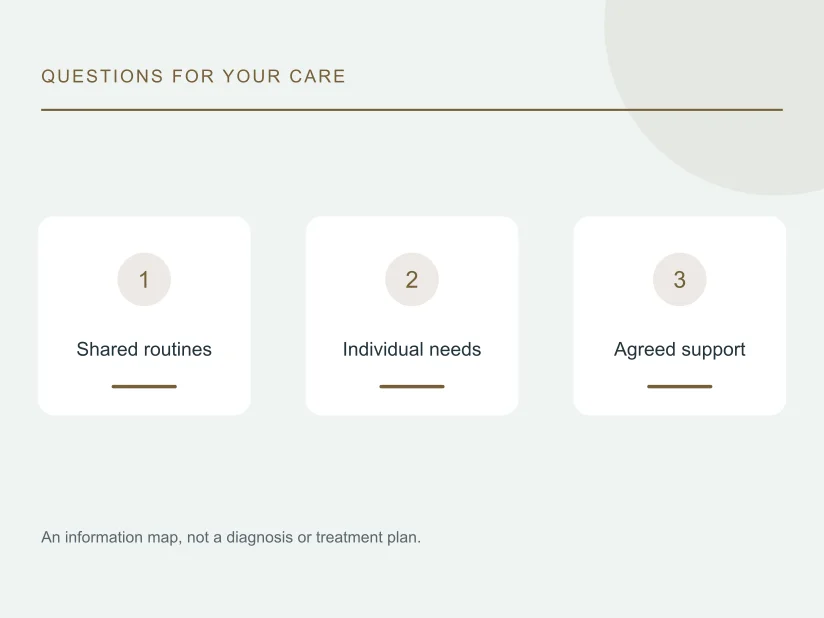
Separate household routines from clinical decisions
You may be able to coordinate shopping or cooking while still needing different advice. NIDDK notes that appropriate food portions depend on individual circumstances. Do not copy a partner’s portions, prescribed treatment or target because you live together. Ask the professional what can sensibly be shared and which decisions require a separate assessment. An identical package does not make two people’s health needs identical.
Agree what support actually feels helpful
Ask each other whether reminders, shared planning or attendance at a session are welcome. Avoid monitoring another person’s plate or turning a weekly weigh-in into a judgement about effort. Each person can raise concerns with the professional without having to defend them to the other. If a joint format makes it harder to speak honestly, ask for separate time rather than assuming togetherness is always supportive.
Source: WHO: Patient safety
Allow different progress and different choices
Ask how the service handles one person pausing, changing goals or needing another type of care. Neither should feel obliged to continue because the other purchased a package. Results do not need to happen at the same pace, and a comparison cannot explain a medical response. Keep the focus on practical cooperation and individual wellbeing rather than proving who followed the plan more faithfully.
Source: WHO: Patient safety
Common questions
Must couples eat identical portions?
No. Ask about individual needs rather than copying a partner’s plan.
Does joining together remove private consultation time?
Ask the service to explain how each person can discuss concerns individually.
Should progress become a competition?
No. Different responses do not establish effort or tell you whose care is appropriate.
Sources and information limits
Sources support general medical principles, not the UAE booking policies or service availability. Confirm instructions and local arrangements with the care provider. The update date does not claim clinician review.
Content policy and review statusQuestions before arranging an appointment?
Enquire about the next steps and availability. An enquiry does not confirm a booking or diagnosis and is not an emergency service.