
Practical questions
Online Reviews Cannot Verify a Weight-Care Provider Alone
A high star average can make a centre look easy to choose, while a frightening story can make every option seem unsafe. Neither is a complete assessment. Reviews may describe communication or convenience, but they do not give you the full clinical record or prove that a particular plan suits your health.
General information for adults. Not a substitute for medical assessment.
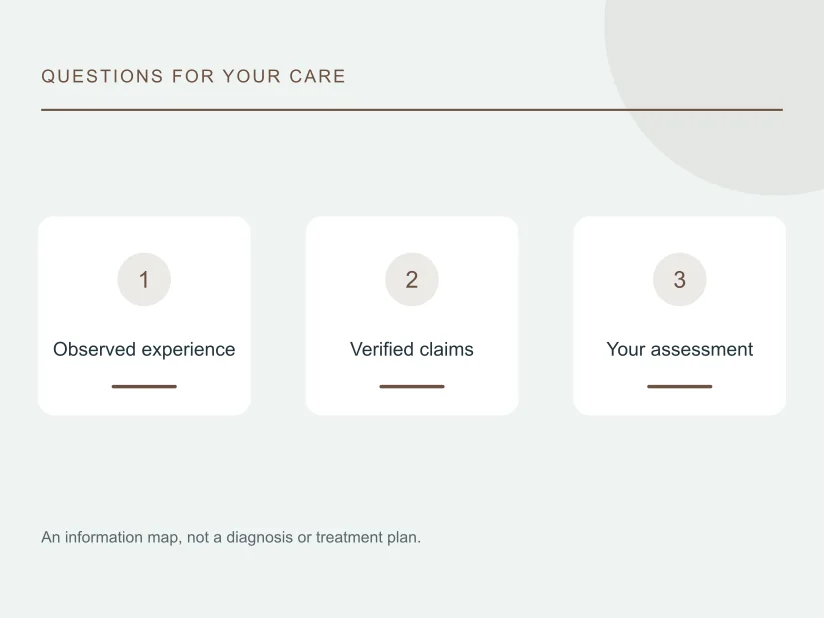
Identify what the reviewer actually observed
A comment about parking, waiting time or courteous staff answers a different question from a claim about medical safety. Ask whether the post describes a specific experience or repeats a marketing phrase. Do not assume you can determine authenticity, a diagnosis or causation from the text alone. Avoid using an anonymous story as proof against a named provider or as a recommendation for a treatment.
Verify the claims that matter to the decision
Ask the service to identify the professionals involved, explain the proposed assessment and provide information about risks, limits and follow-up. NIDDK recommends examining programme staff, support and evidence rather than relying on outcome promises. Confirm locally relevant credentials through the appropriate route. A star rating cannot do that verification for you, and a photograph cannot establish what other care or circumstances produced a change.
Source: NIDDK: Choosing a safe weight-loss programme · NHS England: Shared decision making
Keep your own assessment separate from social proof
Bring any concern raised by a review as a specific question: who handles problems, what is included or how uncertain outcomes are explained. Judge the response alongside an appropriate clinical assessment. You can pause if the explanation remains unclear. Do not buy a package solely because many people appear satisfied, and do not change prescribed treatment because an unfamiliar reviewer says another option worked better.
Common questions
Does a high rating verify clinical credentials?
No. Check the actual professionals and relevant verification separately.
Can an anonymous complaint prove causation?
No. It may raise a question, but it is not a complete clinical or factual record.
Should I ignore reviews entirely?
Not necessarily. Use them to formulate questions, not as the sole basis for a health decision.
Sources and information limits
Sources support general medical principles, not the UAE booking policies or service availability. Confirm instructions and local arrangements with the care provider. The update date does not claim clinician review.
Content policy and review statusQuestions before arranging an appointment?
Enquire about the next steps and availability. An enquiry does not confirm a booking or diagnosis and is not an emergency service.